
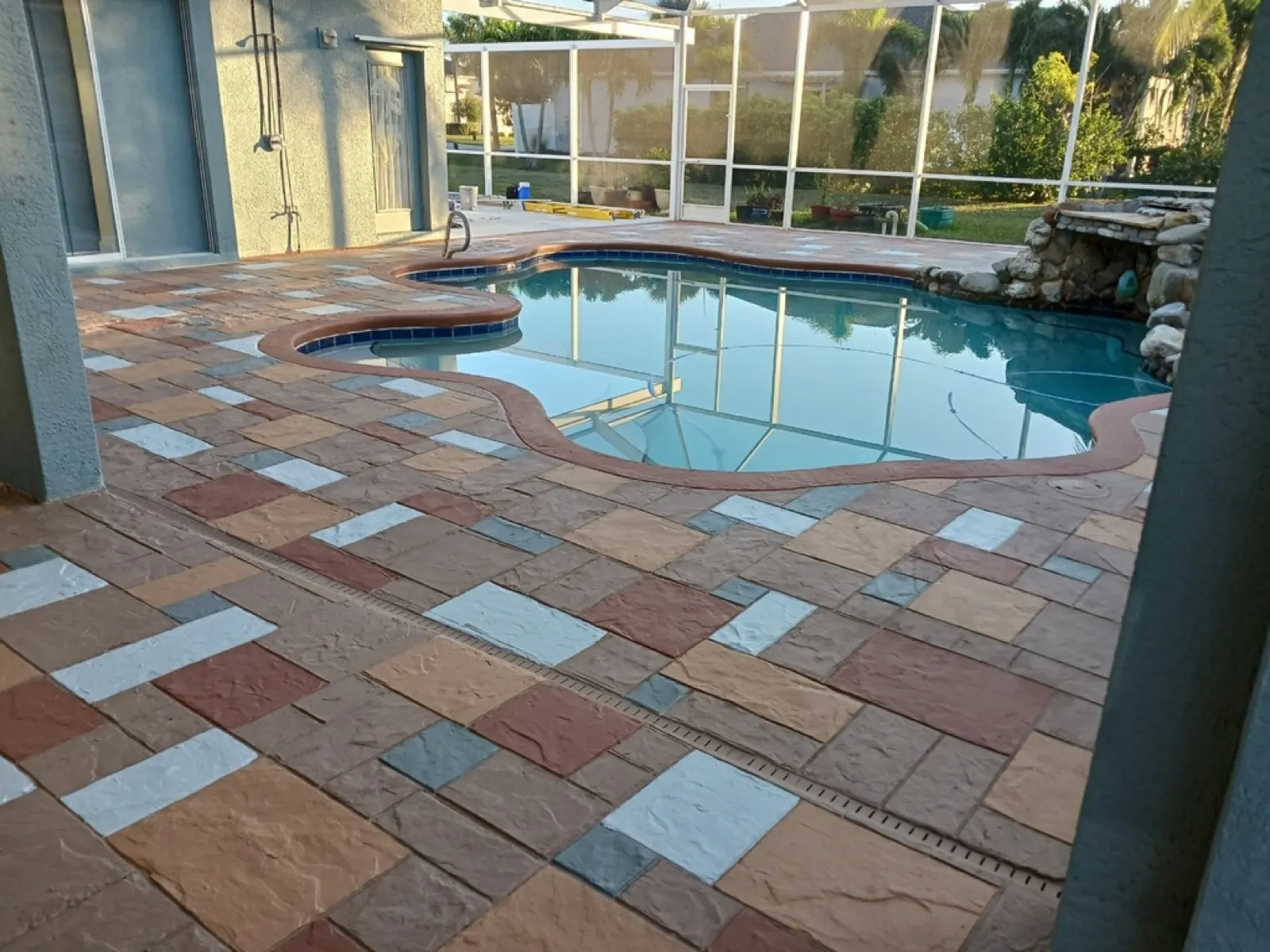
Pool Decks
New paver pool decks, remodels and deck extensions in Palm Bay and across Brevard County. We look at the deck in person before quoting.
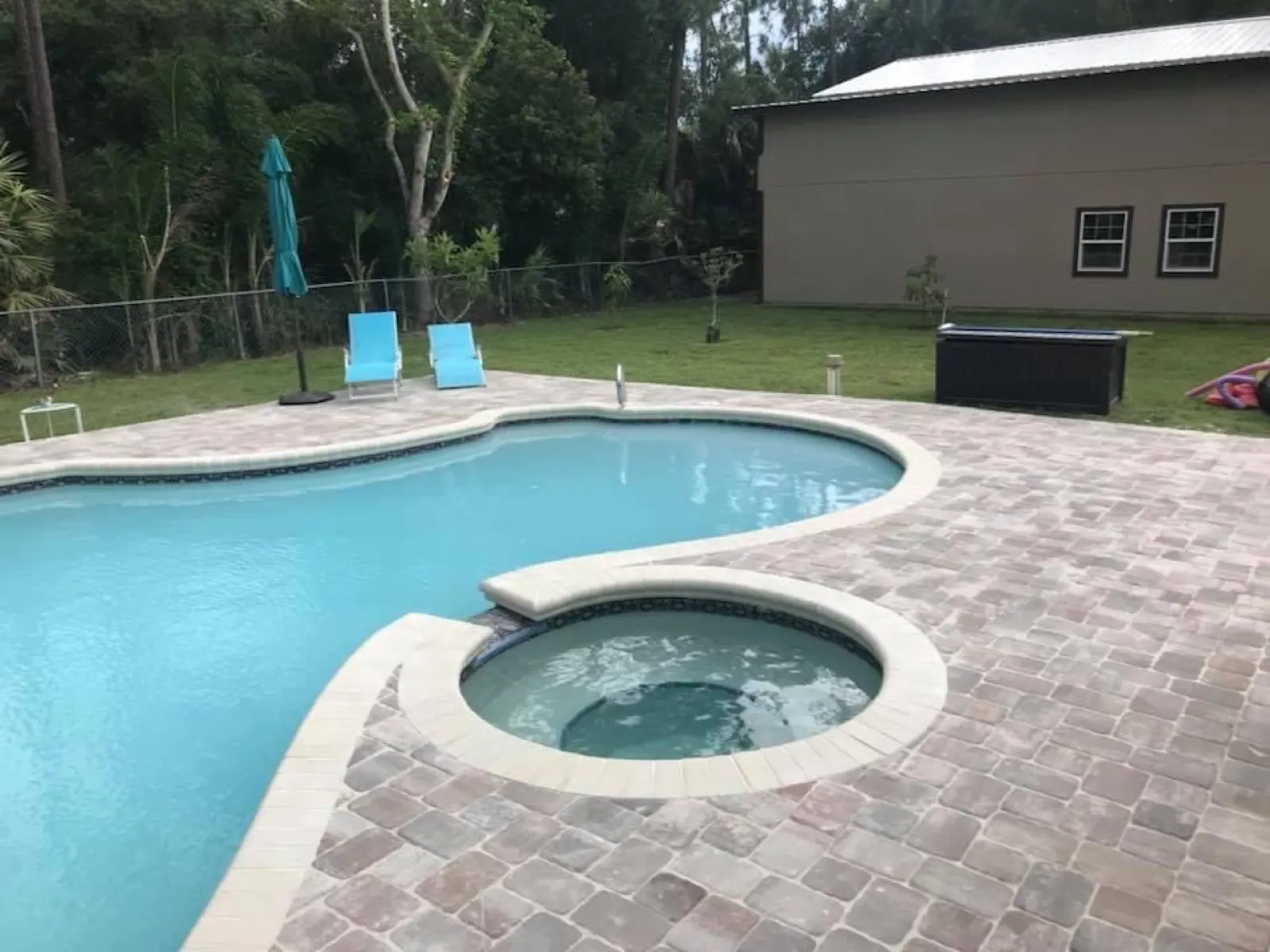
Pool coping is the cap that runs along the top edge of your pool. We set it and replace it in Palm Bay and across Brevard County. It covers the bond beam at the top of the pool wall. It gives the deck a finished edge, and it gives a swimmer something solid to grab on the way out. It also throws splash water back toward the pool instead of letting it soak the base under your deck.
Most coping calls are about an edge that is already there. A piece rocks underfoot, or a corner has chipped off. Sometimes the joint at the deck has opened and water is getting under the pavers. We reset and replace coping on decks we did not build. We also set new coping as part of a new paver pool deck. Either way the edge comes first, because the rest of the deck lines up to it.
Tell us about your project. We get back to you fast.
Coping caps the pool edge, and the job is more than looks. It seals the bond beam, the thickened top of the pool wall, so weather stays out of it. It gives swimmers a safe edge to grip climbing out. It also directs splash water away from the pool structure and off the base under your deck. When coping lets go, the deck beside it usually starts to move as well.
Coping is not set the way the rest of a paver deck is set. The deck field floats on screeded bedding sand over compacted base, so it can flex. Coping is mortared straight to the pool beam. On a concrete pool we scarify the top of that wall first, so the mortar has something to bite. Natural stone coping goes down on a mortar bed the same way. That bed lets us tune the slope of each piece as it is laid.
Two details decide how long an edge lasts. The first is pitch. Each piece slopes about two percent away from the water. That is close to a quarter inch of fall per foot. The second is the joint where the coping meets the deck. The pool and the deck move on their own. That gap takes a closed cell foam backer rod and a flexible sealant. Sand does not compress, so a sand filled joint hands deck movement straight to the coping.
Bullnose coping has a rounded front edge, and it is the shape most people picture at a pool. The curve is easier on hands and forearms. It also follows a freeform pool without reading as a row of blocks. Square edge coping gives a flat, sharp line that suits a rectangle or a straight run. On a curved pool we stay under eighteen inch pieces. Long units around a radius look choppy and eat cutting time.
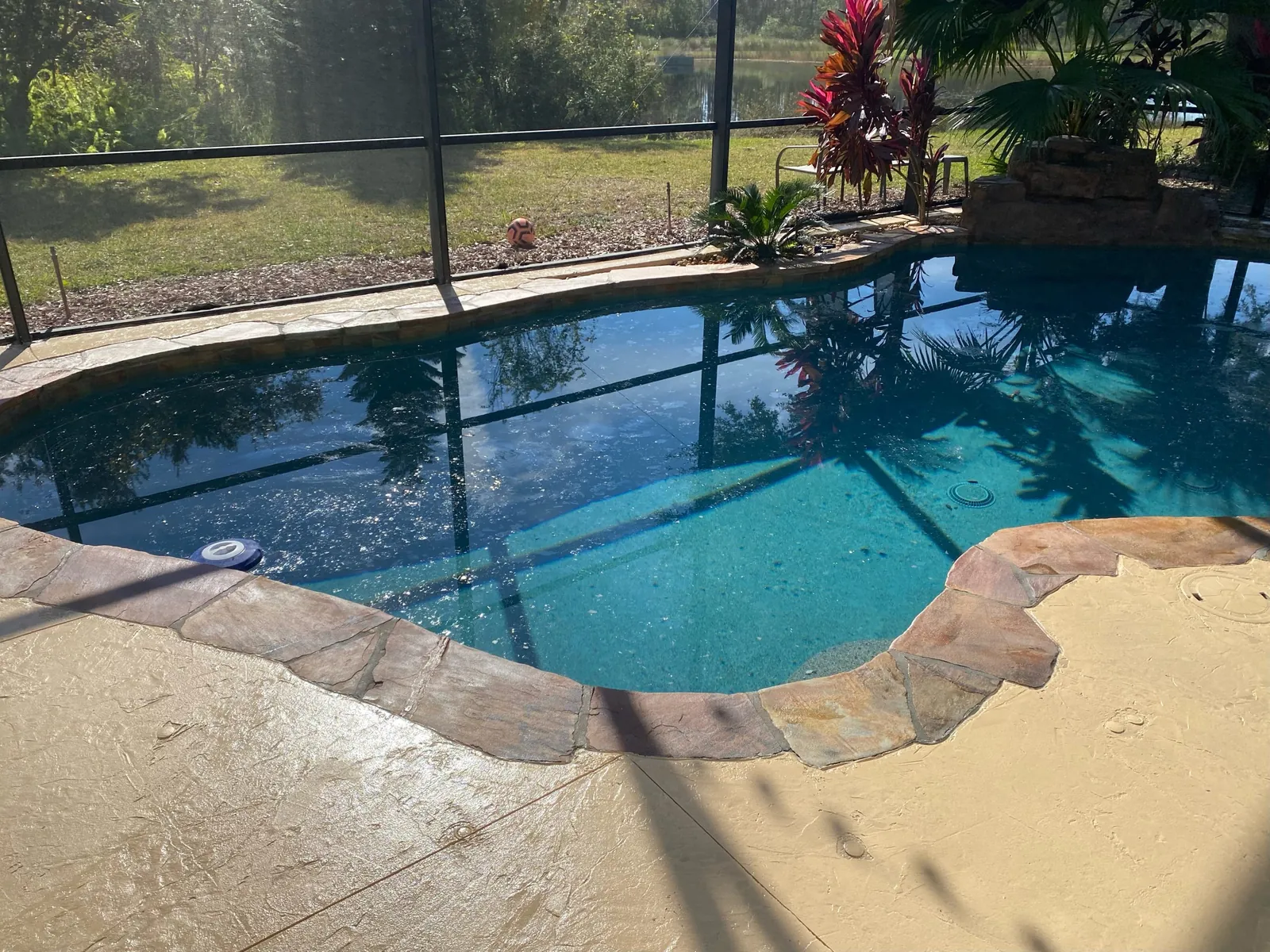
Travertine is the natural stone option, and it goes on a mortar bed like any stone coping. The stone is full of small pores, so it sheds heat instead of storing it. Lighter shades reflect more sun and darker blends soak it up, which you feel on bare feet in July. Coping can match the deck field or run a shade off it as a border. We leave samples at the edge before you pick.
A stamped concrete deck can carry a poured edge instead of a set piece. Forms clip to the pool edge and the deck pours right over them. The coping and the deck come out as one unit, with no seam across the surface. The front edge is formed with a bullnose profile. That edge belongs with a stamped concrete pool deck. It is the one style that cannot be lifted and reset later.
Start with a tap. Go around the edge with a rubber mallet or a knuckle and listen to each piece. A hollow sound means the mortar bond under the stone has failed, so that piece is riding on air. A stone that rocks under your foot has already lost its grip. Cracks through the body of a piece point the same way. So do chips at the water line and a caulk joint that has split open.
One or two loose pieces on an otherwise tight edge can come up and go back on fresh mortar. Once several read hollow, the whole run is the better job, because the mortar bed failed as a unit. Regrouting the top of a failed joint is a short term fix that comes back within a season or two. Plaster, waterline tile, the shell or beam itself, plumbing, equipment and leaks all belong to a pool contractor.
In most cases yes, and that is how we work. The water level drops a few inches below the coping line. That gives a dry edge to work on while the shell stays loaded. An empty pool loses the downward weight of the water that holds it in place. Groundwater pressure can then damage the shell. In the flatwoods soils common across Brevard, the water table runs shallow. It sits under eighteen inches for one to four months in most years.
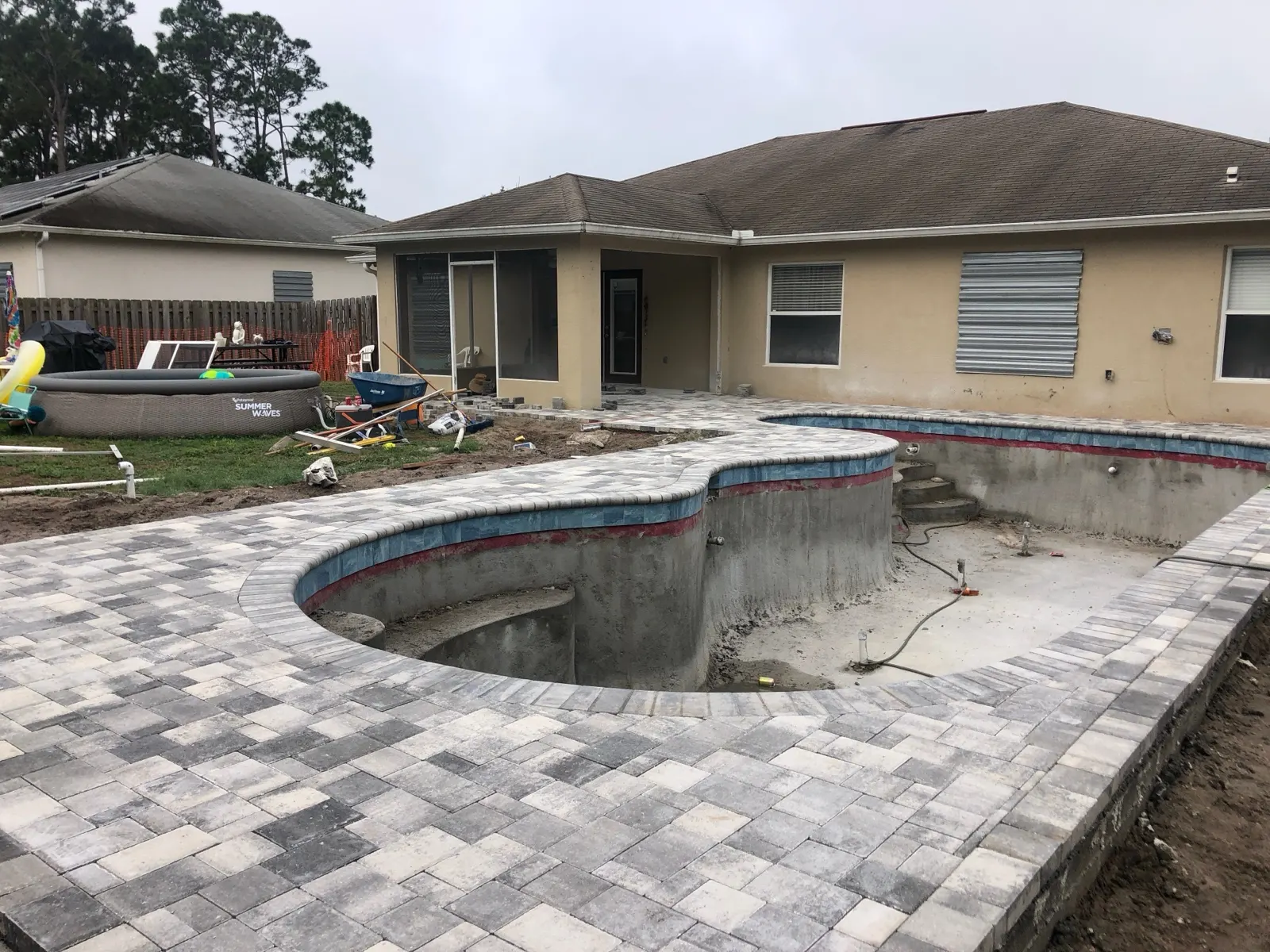
Old coping comes off in sections with hand tools rather than a jackhammer, so the beam underneath stays intact. The beam then gets cleaned of old mortar and checked before anything new goes on. New pieces are dry fit and cut first, corners before the straight runs. The cuts then land where they look deliberate. Each piece is bedded in mortar and set with about two inches of overhang over the water. The fall runs away from the pool.
Coping often rides along with a bigger deck job. When the field is being replaced anyway, new coping and new pavers go down together. The colors get picked as one set. When only the surface is changing, the existing coping usually stays put. That is the normal path under thin pavers set over concrete or a resurfaced concrete deck. Height at the edge decides it. Thin pavers lift a deck about an inch and a half.
Coping is priced by the linear foot around the pool, so the perimeter is the first number. Shape moves it next. A freeform pool needs a mitered cut on nearly every piece, while a rectangle runs long and straight. Material is the third lever, and a natural stone like travertine sits above a concrete coping paver. Whether the old coping has to come off changes the day count. A beam that needs cleaning adds to that.
Joint work is its own line. Cutting out old sealant, setting backer rod and running fresh caulk around the pool takes a full pass. Access counts as much as anything. Most Brevard pools sit inside a screen cage, with the aluminum track right at the deck edge. No machine fits through a screen door. Sealing the new stone is an optional last step after our own work. Book a free on-site estimate and we measure the edge before quoting it.
Free, no-obligation estimates across Palm Bay & Brevard County.
(321) 215-5817From the first look at the job to the final walk-through, here is exactly how it goes.
Call (321) 215-5817 or send the form. Tell us what you want built or fixed, and where in Brevard County the job is.
We meet you at the property, measure the actual surface, and go through patterns, pavers and colors with you. The estimate is free and priced from the real job.
We prep the ground or the slab, then pour, stamp or lay the new surface. You know the plan and the schedule before work starts, and you hear about anything unexpected immediately.
We review the finished work with you, leave the site clean, and go over cure times and care so the new surface stays looking new.
Common questions about pool coping across Palm Bay & Brevard County. Don't see yours? Give us a call and ask.
New paver pool decks, remodels and deck extensions in Palm Bay and across Brevard County. We look at the deck in person before quoting.
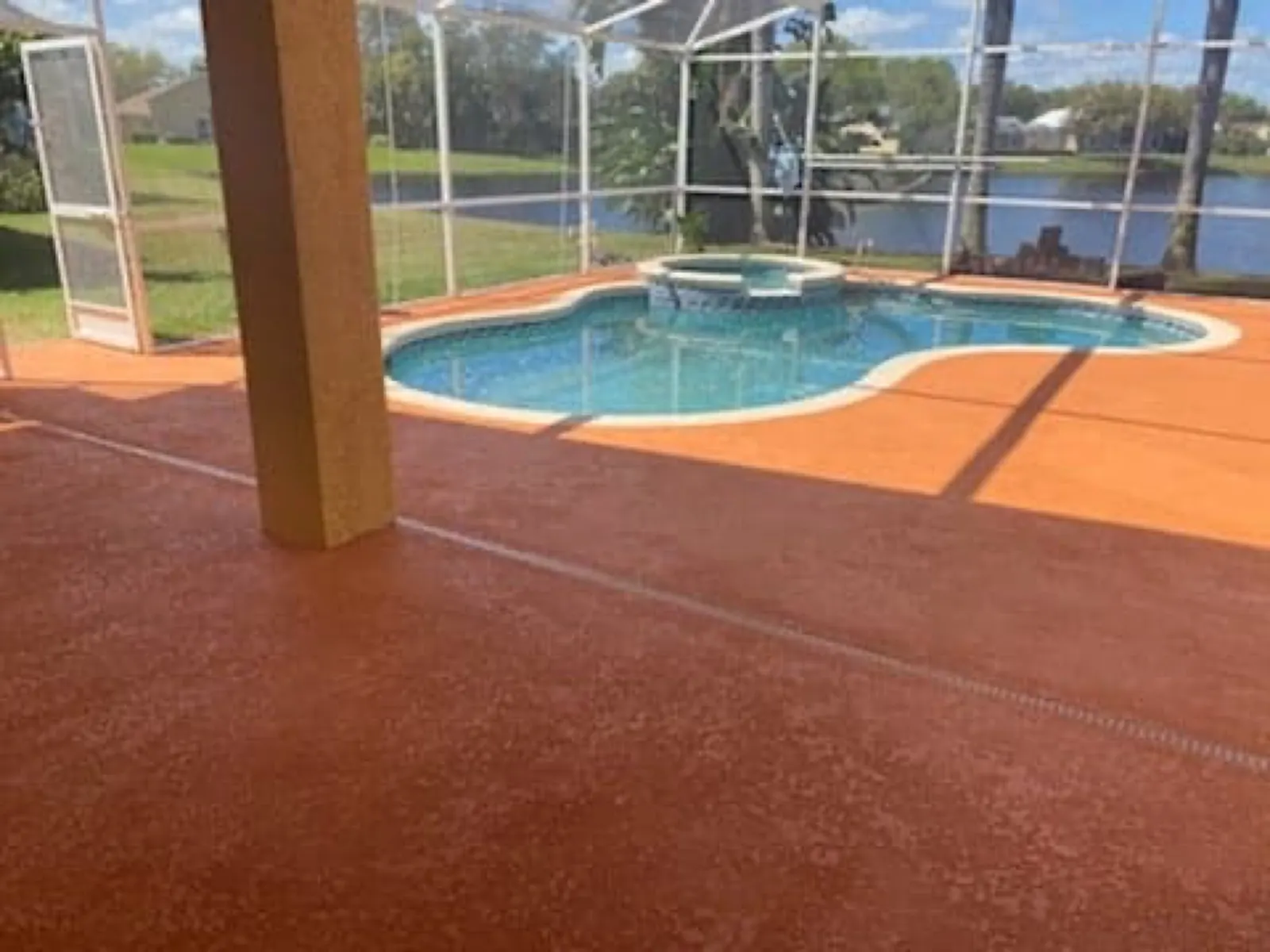
We resurface existing concrete pool decks across Brevard County with knockdown spray texture, stamped overlays or thin pavers.
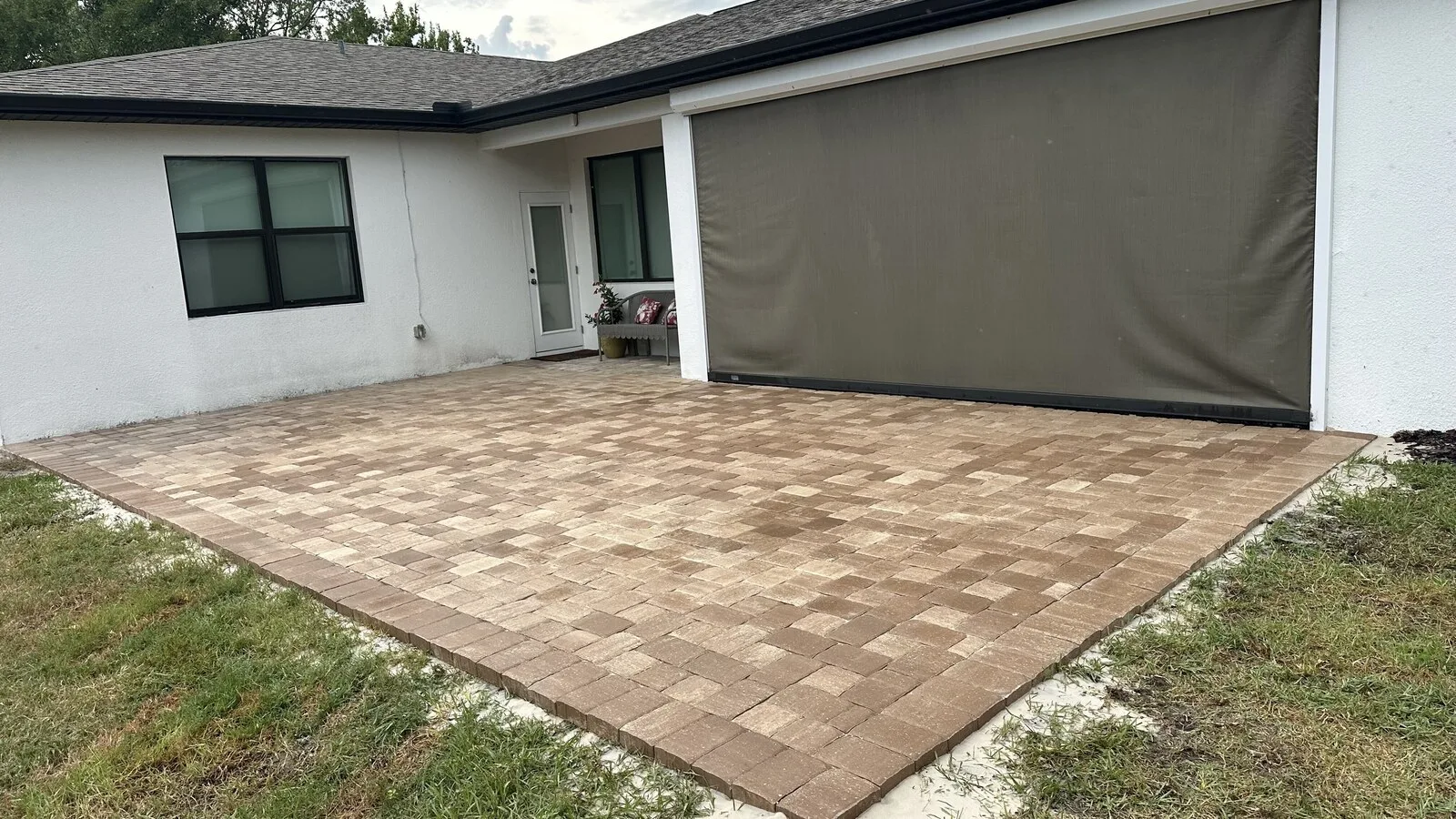
Thin pavers set over your existing concrete porch, patio or lanai. You get a real paver surface in Palm Bay without breaking out the slab first.
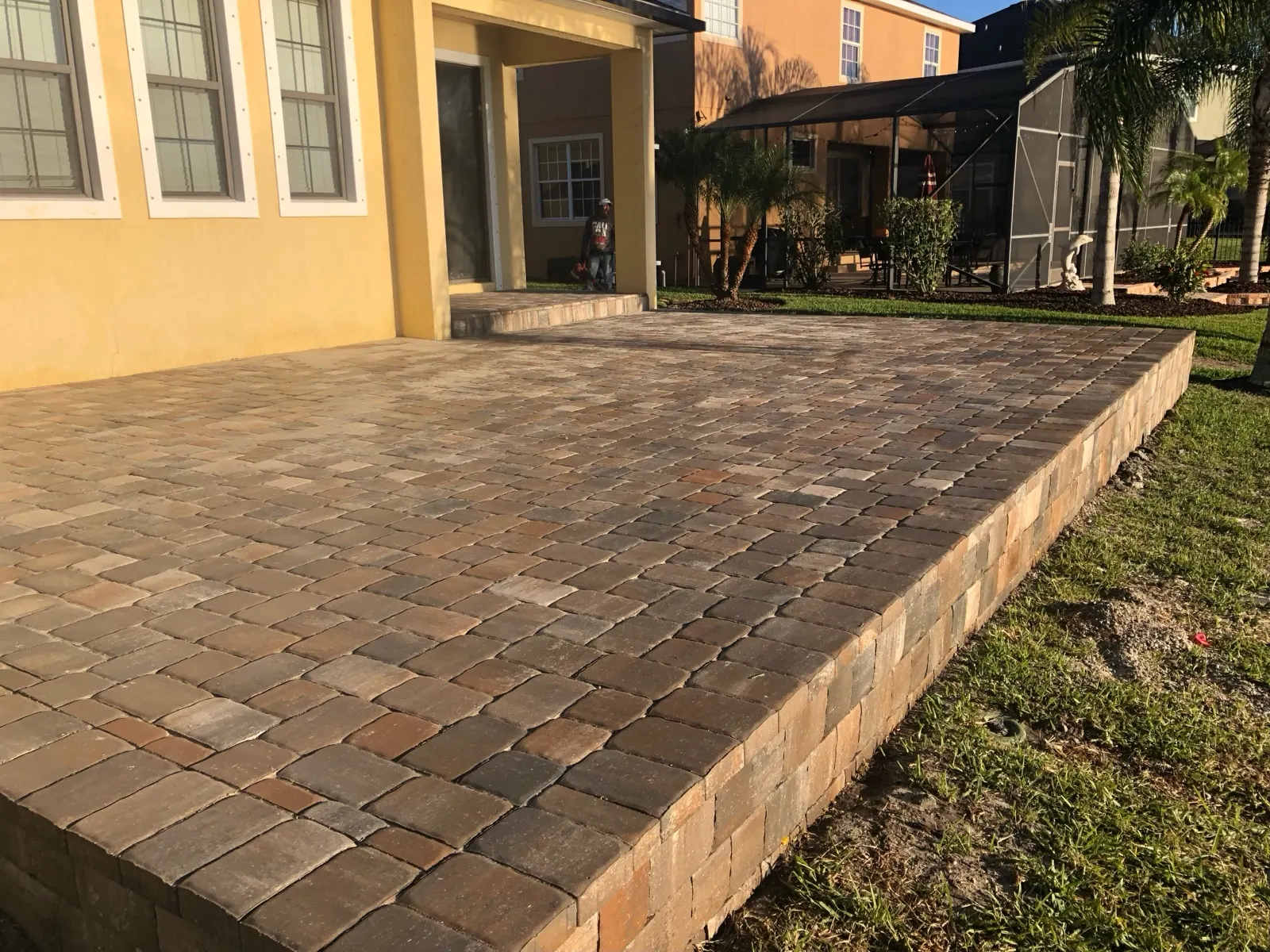
We repair pavers across Brevard County. Settled sections get lifted, the base under them rebuilt, and the same stones reset level with the field.
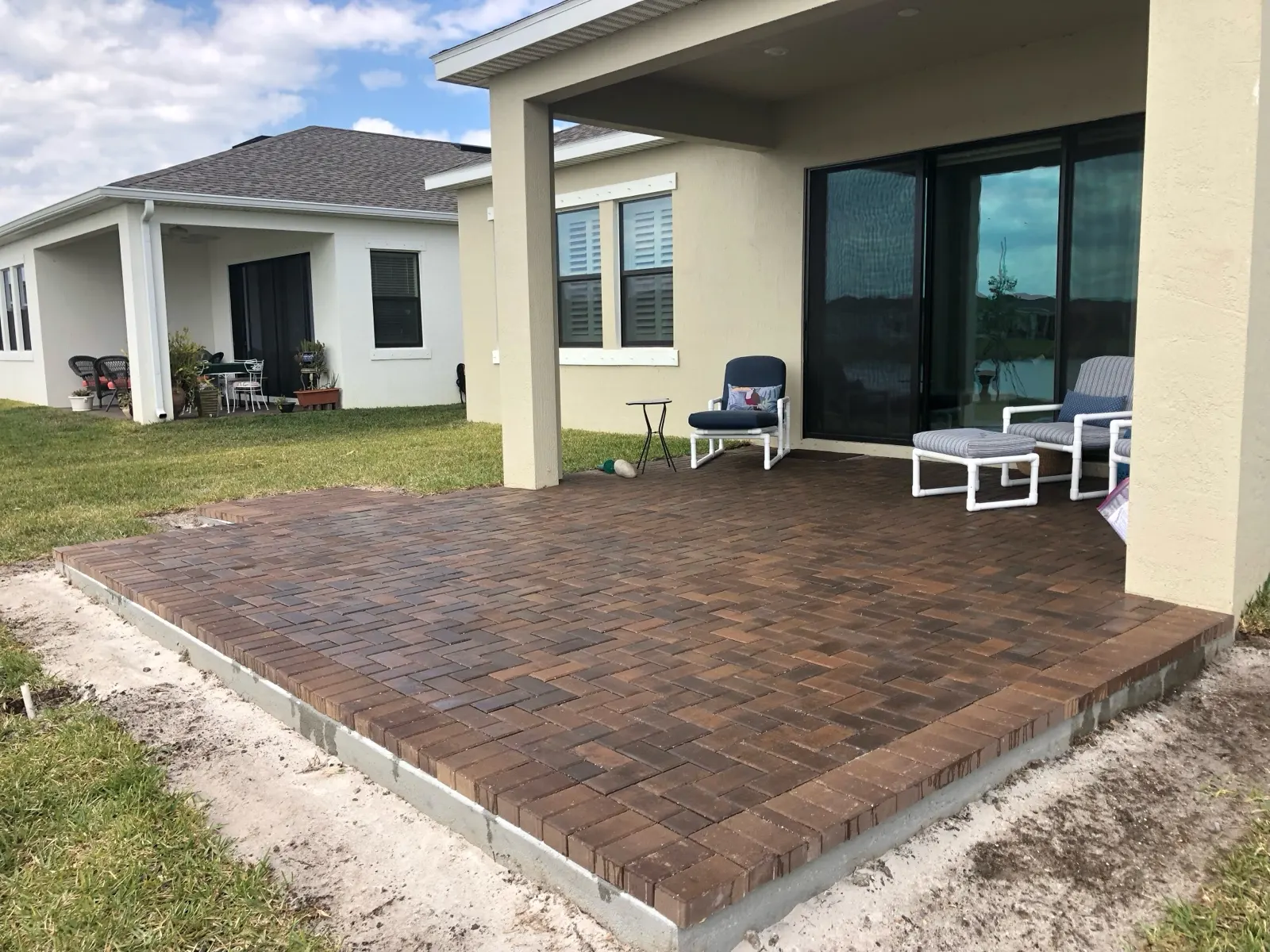
We build paver patios for homes in Palm Bay and across Brevard County. Patio layout, sandy soil base prep, pattern and border choices, plus fire pit areas and seat walls.
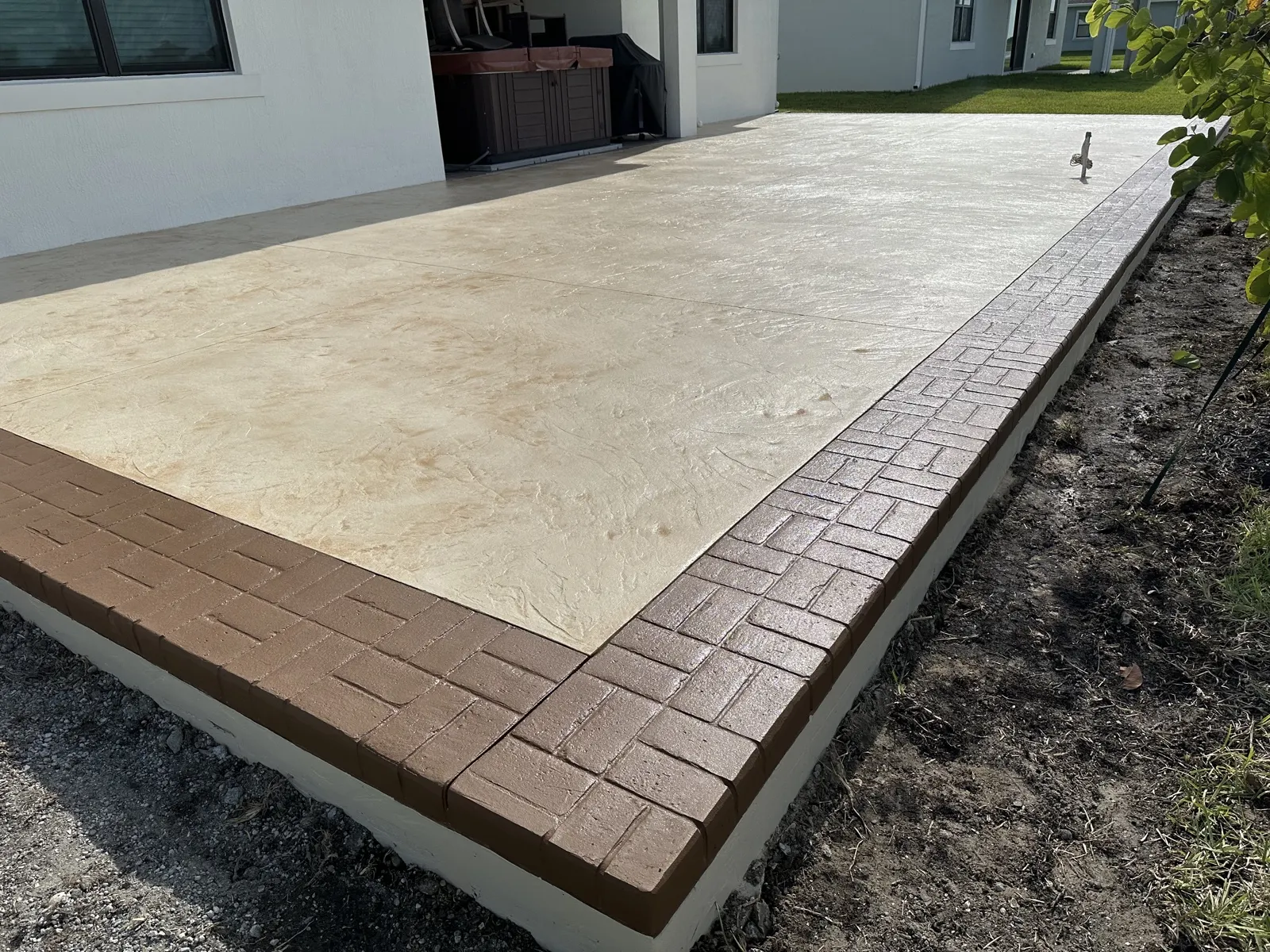
Stamped concrete patios and driveways in Palm Bay and across Brevard County. Poured fresh, pressed with pattern and color, and finished with hand-carved borders or a compass star.
Most outfits lay pavers or pour concrete. We do both, so you see each option priced on your actual project and pick what fits the house and the budget.
Stamped concrete is the specialty. Stone, wood and brick patterns, colors matched to your home, borders and hand-carved details you will not get from a builder-grade slab.
Every estimate comes from a site visit. We measure the real surface, show you patterns and pavers on the spot, and price the job you actually have.
Based in Palm Bay, working the whole county. Florida sun, salt air and summer rain shape how every surface here gets built, and we build for it.
A driveway that needs replacing, a patio you want stamped, a pool deck past its best? Call or send the form. We come out, look at the job with you, and quote it free.
Tell us about your project. We get back to you fast.