
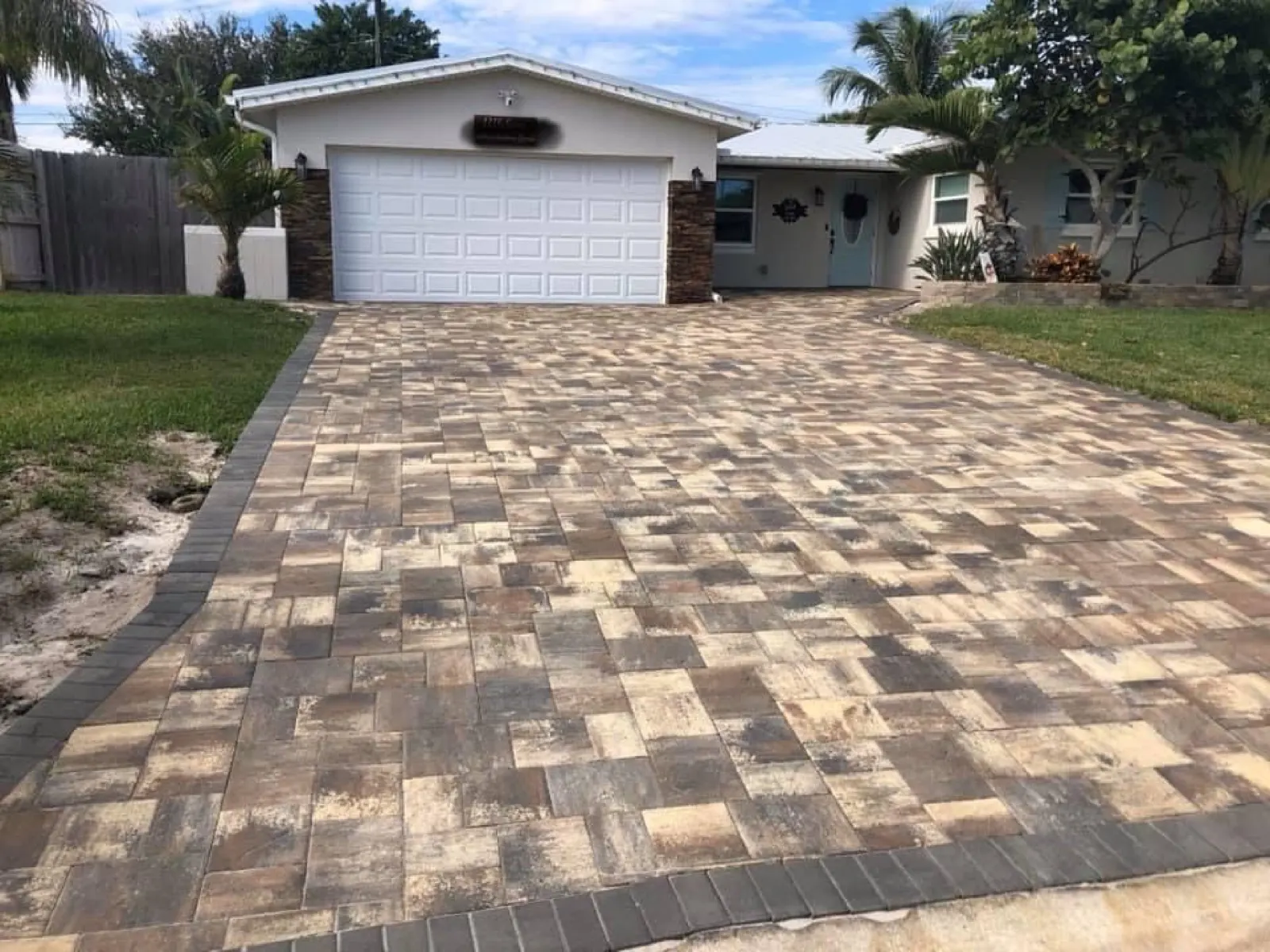
Paver Driveways
We install paver driveways in Palm Bay and across Brevard County. New installs and extensions, set on a compacted base sized to carry vehicle weight, with the pattern and color you pick.
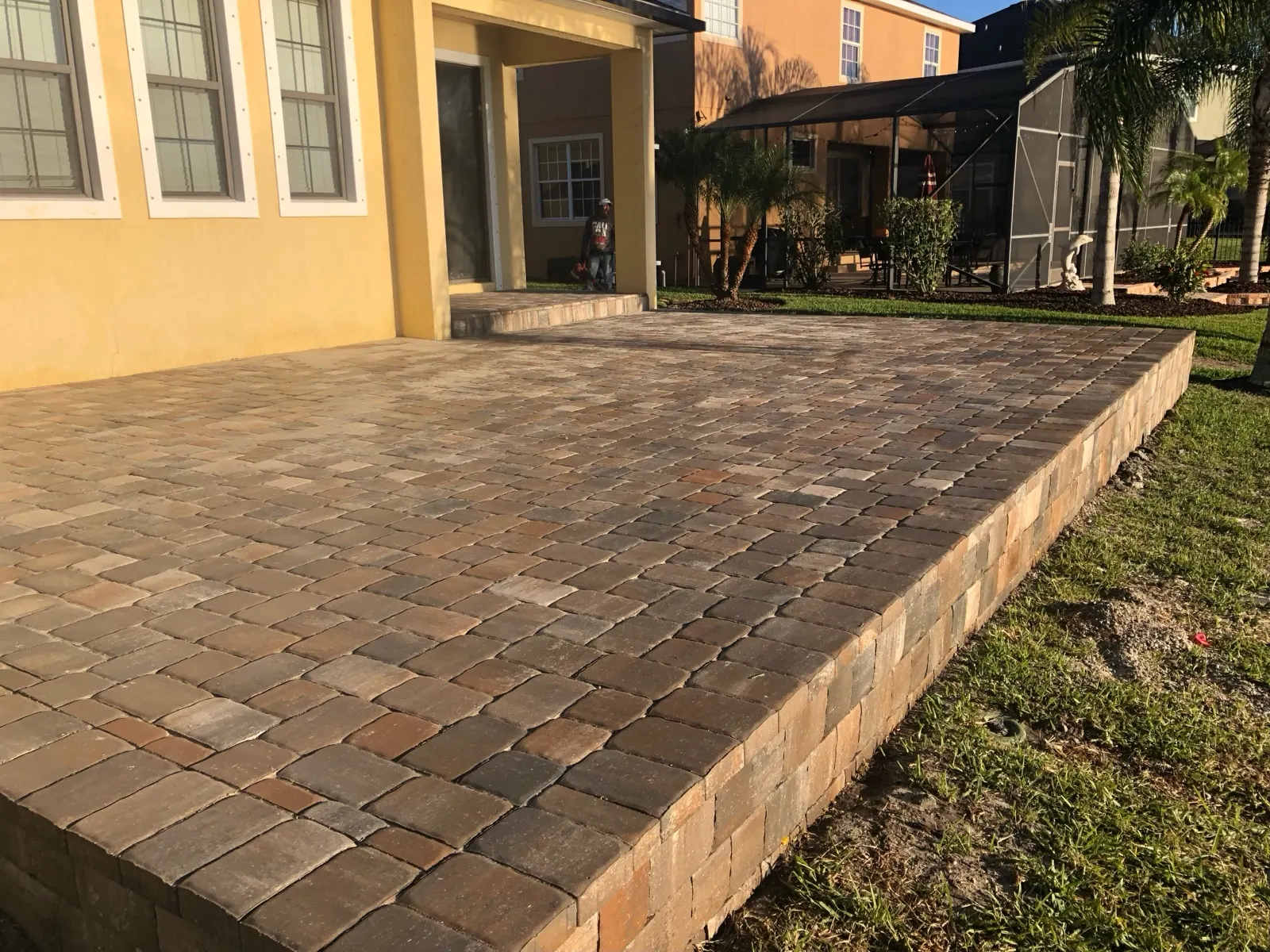
Paver repair fixes a paver surface that has gone uneven while the stones themselves are still sound. We repair pavers in Palm Bay and across Brevard County, on driveways, patios, walkways and pool decks. Most calls describe the same thing. A sunken tire track near the garage, a low corner by a downspout, or a row pushed up by a tree root. The pavers are usually fine. What failed is the base under them, so that is where the repair starts.
This page is about pavers that are already down. We pull and reset settled sections, relay whole fields that have gone wavy, and swap broken or stained stones for matching ones. We also reset edge restraint that has let the outside rows spread. The cause gets fixed first, because a repair over a live drainage problem sinks again. If the stones are past saving, the job becomes a paver driveway installation or a new paver patio instead.
Tell us about your project. We get back to you fast.
Pavers sink because something under them moved. The field is a flexible system. Stones sit on about an inch of bedding sand, and that sand sits on compacted rock. Take support out of any layer and the surface drops into the gap. A plate compactor only densifies a few inches of rock at a time. A thick layer dumped in at once stays loose underneath, and that loose part keeps settling for years.
Brevard sits on sandy flatwoods soil. It drains fast, but loose sand travels when water runs through it. About 51 inches of rain falls here in a year, most of it between late May and October. In the flatwoods soils common across the county, the seasonal high water table sits close to the surface. Depending on the spot it runs a foot and a half to six feet down for months at a time. Wet sand carries less load than dry sand.
There is no freeze and thaw cycle here, so pavers do not heave from ice. The triggers are water and roots. A downspout dumping beside the drive is the common one. A 2,000 square foot roof sheds roughly 1,250 gallons in a one inch rain. Concentrated at one corner, that pulls sand out of the base. Trenches cut for plumbing or irrigation settle later if the backfill went in loose. The pattern repeats county wide, from Titusville down to Palm Bay.
The repair starts with the failed area, and it is usually bigger than the low spot you see. We press on the stones around it and listen for the hollow click of a paver with no support. Those get marked and come up too. Pulling starts at a joint with a screwdriver or a paver puller, so the edges stay clean. The pavers get stacked in order and face up, so the pattern goes back the way it came out.
Under the stones we take out the old bedding sand and dig into the base until we hit material that holds. Fresh crushed rock goes back in layers, wetted and compacted until the plate stops sinking in. Then about an inch of coarse bedding sand gets screeded to the slope of the field around it. That inch matters. Extra sand used to bring a low spot up to grade compresses under traffic, and the patch drops again in a season.
The same stones go back into the bed and get tapped down. Leveling gets checked with a straightedge run from the old surface across the patch. Where edge restraint had pulled loose, it gets reset and spiked back into the base every 8 to 12 inches. We compact the surface, sweep polymeric sand into the joints, and water it in so it sets up. Give the joints a day before walking on the patch and two to three days before parking.
Most jobs are spot repairs. One low area, a sunken tire track, a few stones lifted over a root. We rebuild the base under that section and reset the same pavers, so the patch blends into the weathered stone around it. A repair like that is usually a day. Spot repair works while the rest of the field is still flat and the stones are sound. Once several low spots show up in one field, a full relay usually costs less than patching each one.
When the whole field rolls underfoot, relaying is the better call. That is what many people mean by paver restoration. We lift the pavers, rebuild the base across the area, screed new bedding sand, and set the same stones back down. You keep the material you already paid for. A large patio runs a few days. If the pavers sit on an old concrete slab, that is a thin paver overlay, and the repair follows the slab instead.
Broken, chipped or stained pavers get replaced one at a time, brick or concrete. That is the advantage over a slab. Matching is the hard part. Pavers fade under Florida sun, and color blends get discontinued. A new stone rarely matches a 10 year old one. Keep any spares from the original install. When there are none, we borrow stones from a hidden run along a house wall and put the new ones there.
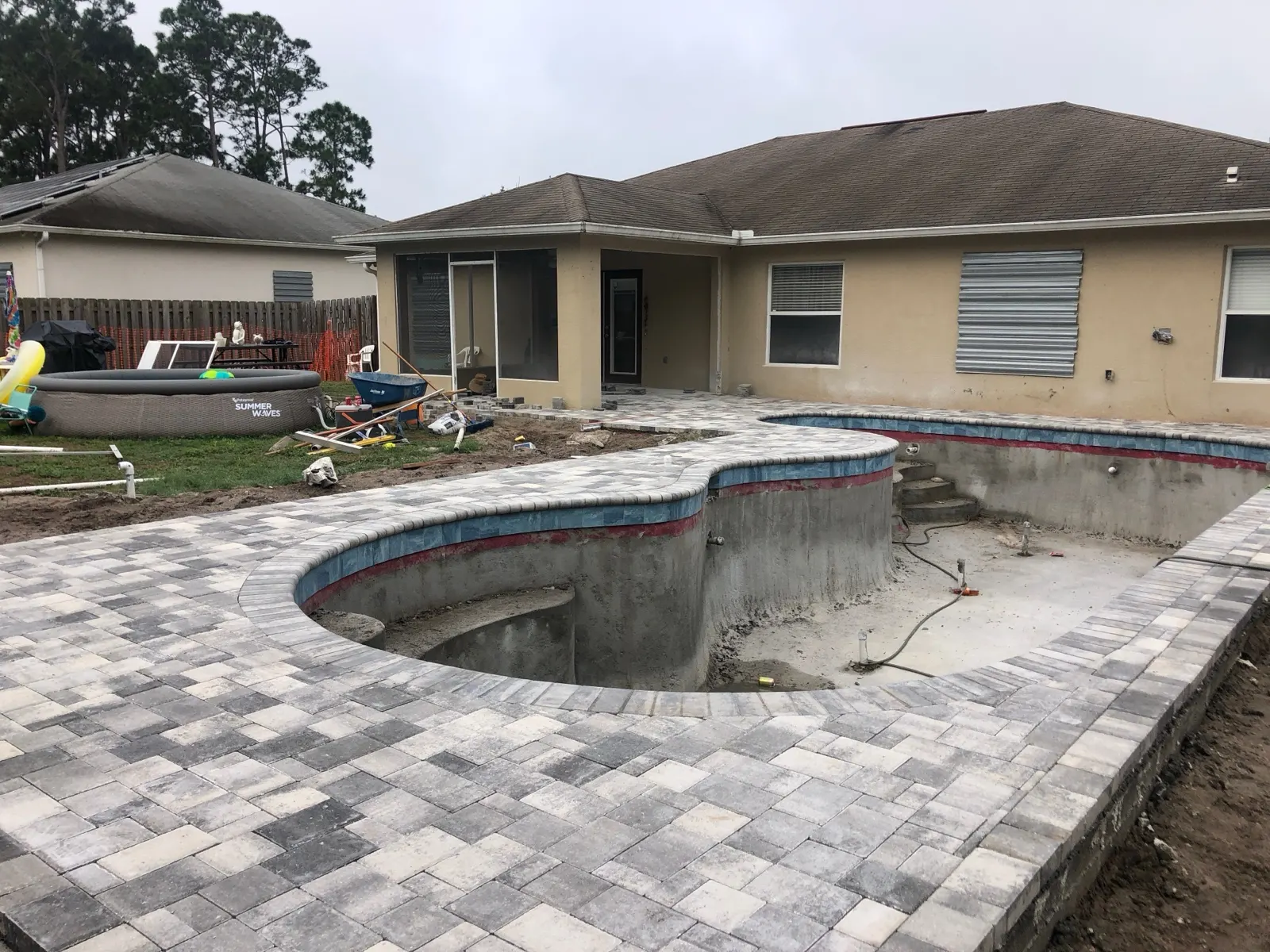
Pool decks settle for their own reasons. Deck drains and the fall away from the coping move water in a set direction. Where that slope has flattened, water sits and works into the base. Splash out and a pool that overflows in an August storm do the same at the coping line. We reset the settled pavers, put the fall back in toward the drain, and reset coping that has come loose. A new deck is a paver pool deck installation.
Most Brevard pools sit inside a screen enclosure, and no machine fits through a screen door. Base rock, sand and pavers move in by wheelbarrow, and the spoil goes out the same way. A repair inside a cage takes longer than the same repair in an open yard. On driveways, the settling shows up first where tires turn in and stop, near the garage apron. That area carries the most load, and it is often where the original base was thinnest.
The size of the failed area sets the starting point, and how deep the problem goes sets the rest. A patch that only needs the bedding sand re-screeded is one job. Digging the base out to firm ground is another. Access counts too. A back patio inside a screen enclosure means every load moves by wheelbarrow. Depth of the settlement counts as well, because a low spot several inches down takes more rock to bring back up.
The cause of the failure is its own line. Rerouting a downspout, cutting a root and setting a barrier, or fixing the slope all add work. Skipping that step buys a repair that fails twice. Replacement stones, new edge restraint and polymeric sand add material. A whole field relay carries more labor than a patch, and cuts around a curve or a border take time. Every repair gets priced from the site, with a free on-site estimate.
Free, no-obligation estimates across Palm Bay & Brevard County.
(321) 215-5817From the first look at the job to the final walk-through, here is exactly how it goes.
Call (321) 215-5817 or send the form. Tell us what you want built or fixed, and where in Brevard County the job is.
We meet you at the property, measure the actual surface, and go through patterns, pavers and colors with you. The estimate is free and priced from the real job.
We prep the ground or the slab, then pour, stamp or lay the new surface. You know the plan and the schedule before work starts, and you hear about anything unexpected immediately.
We review the finished work with you, leave the site clean, and go over cure times and care so the new surface stays looking new.
Common questions about paver repair across Palm Bay & Brevard County. Don't see yours? Give us a call and ask.
We install paver driveways in Palm Bay and across Brevard County. New installs and extensions, set on a compacted base sized to carry vehicle weight, with the pattern and color you pick.
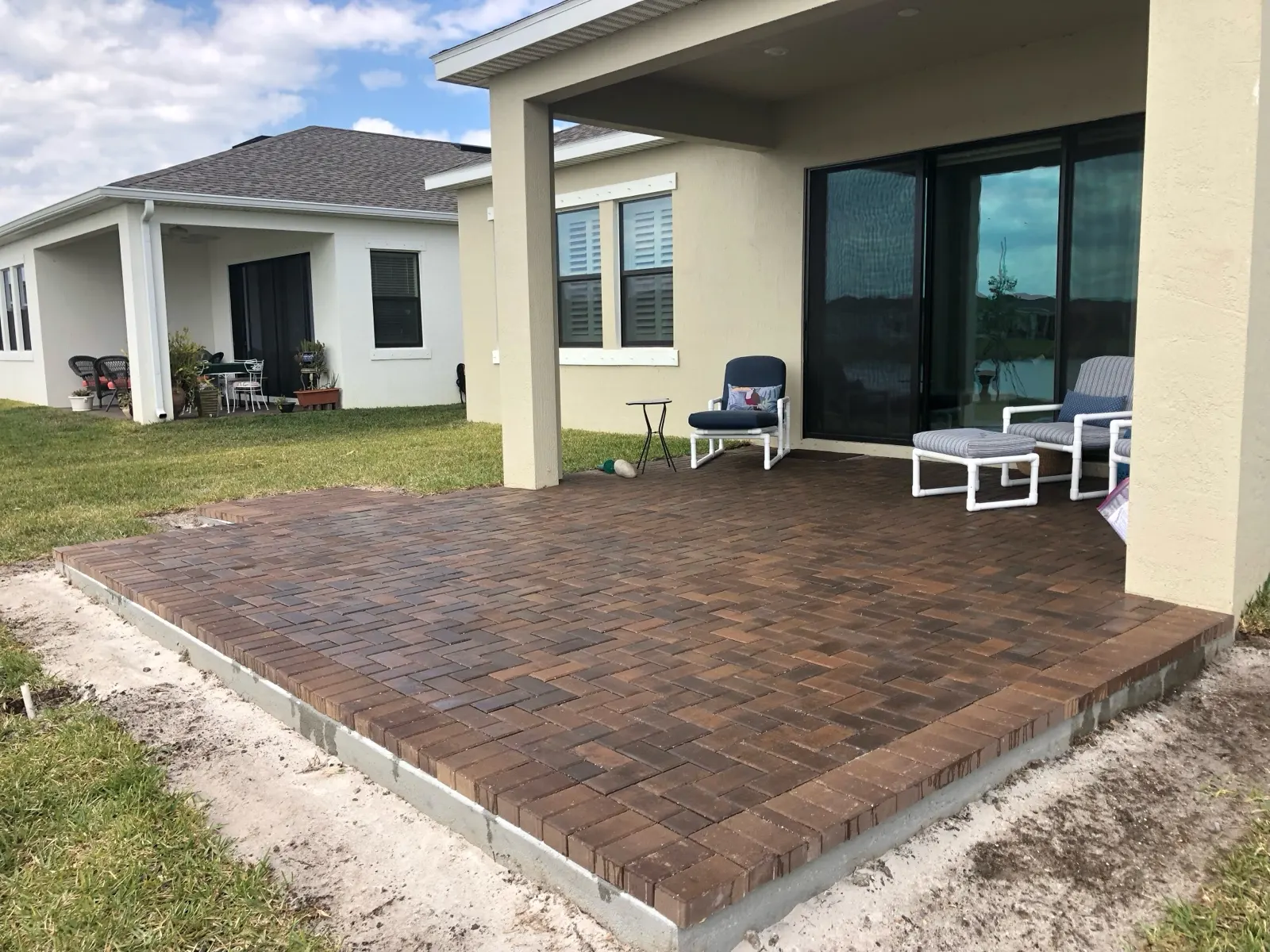
We build paver patios for homes in Palm Bay and across Brevard County. Patio layout, sandy soil base prep, pattern and border choices, plus fire pit areas and seat walls.
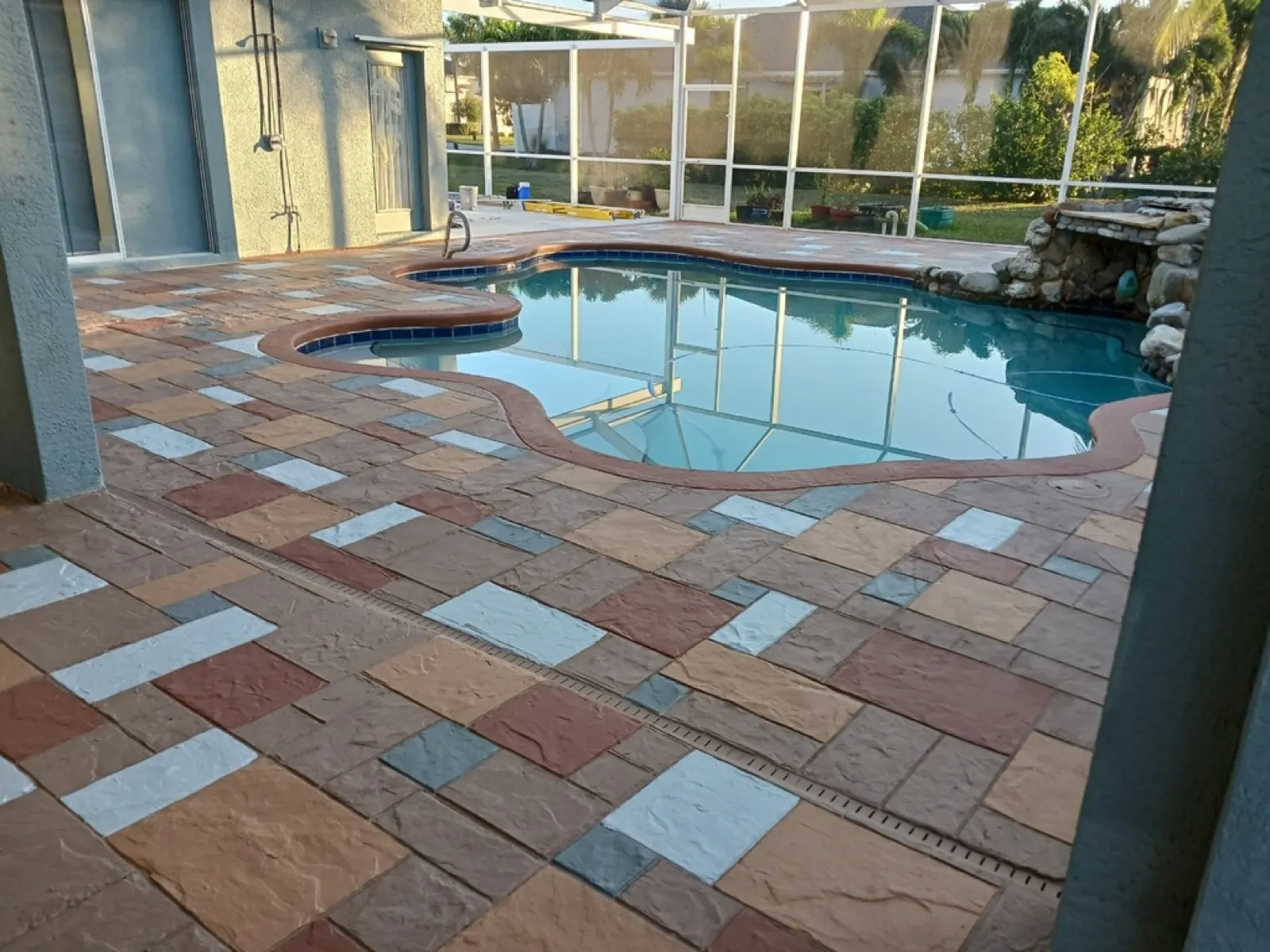
New paver pool decks, remodels and deck extensions in Palm Bay and across Brevard County. We look at the deck in person before quoting.
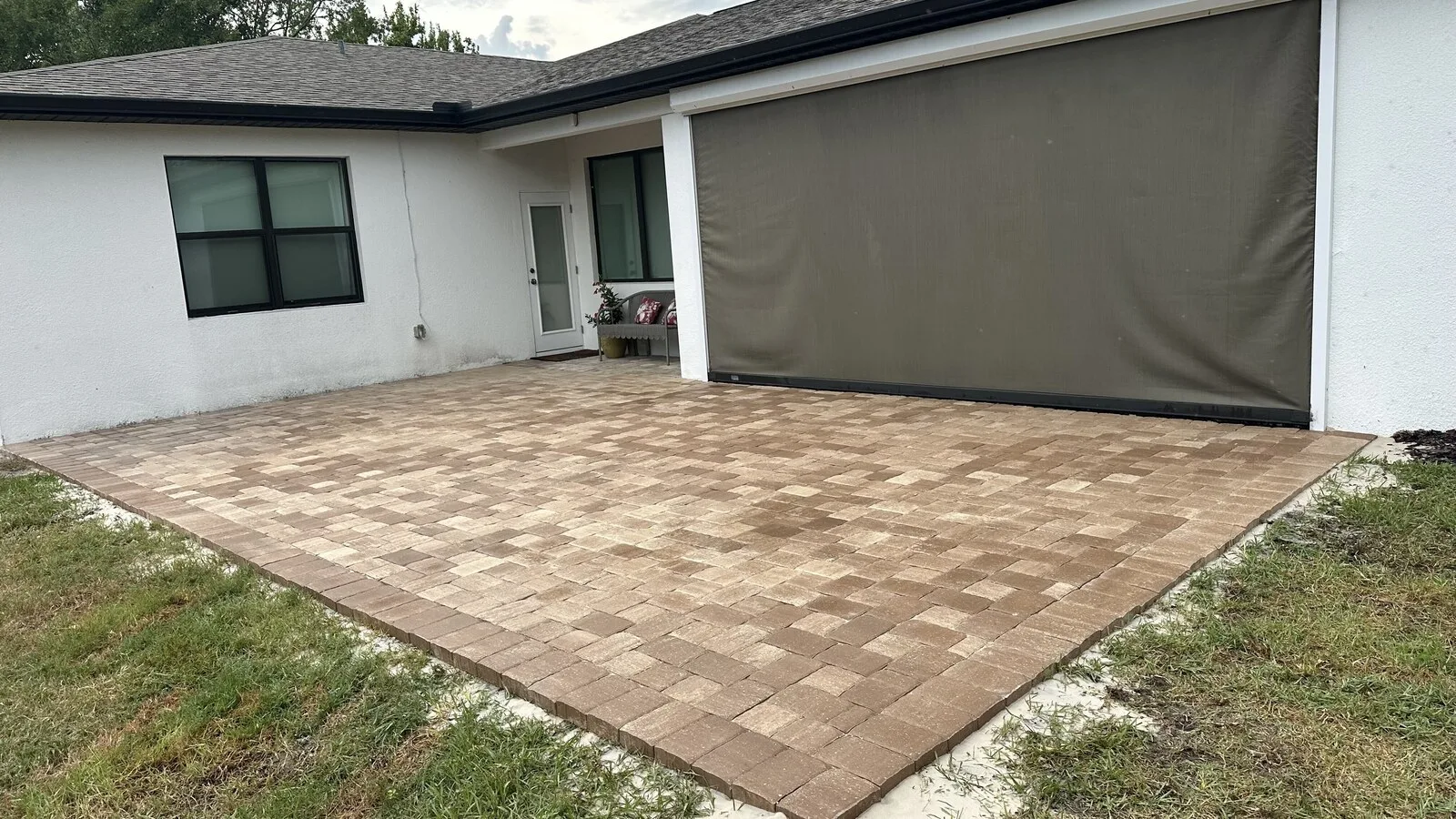
Thin pavers set over your existing concrete porch, patio or lanai. You get a real paver surface in Palm Bay without breaking out the slab first.
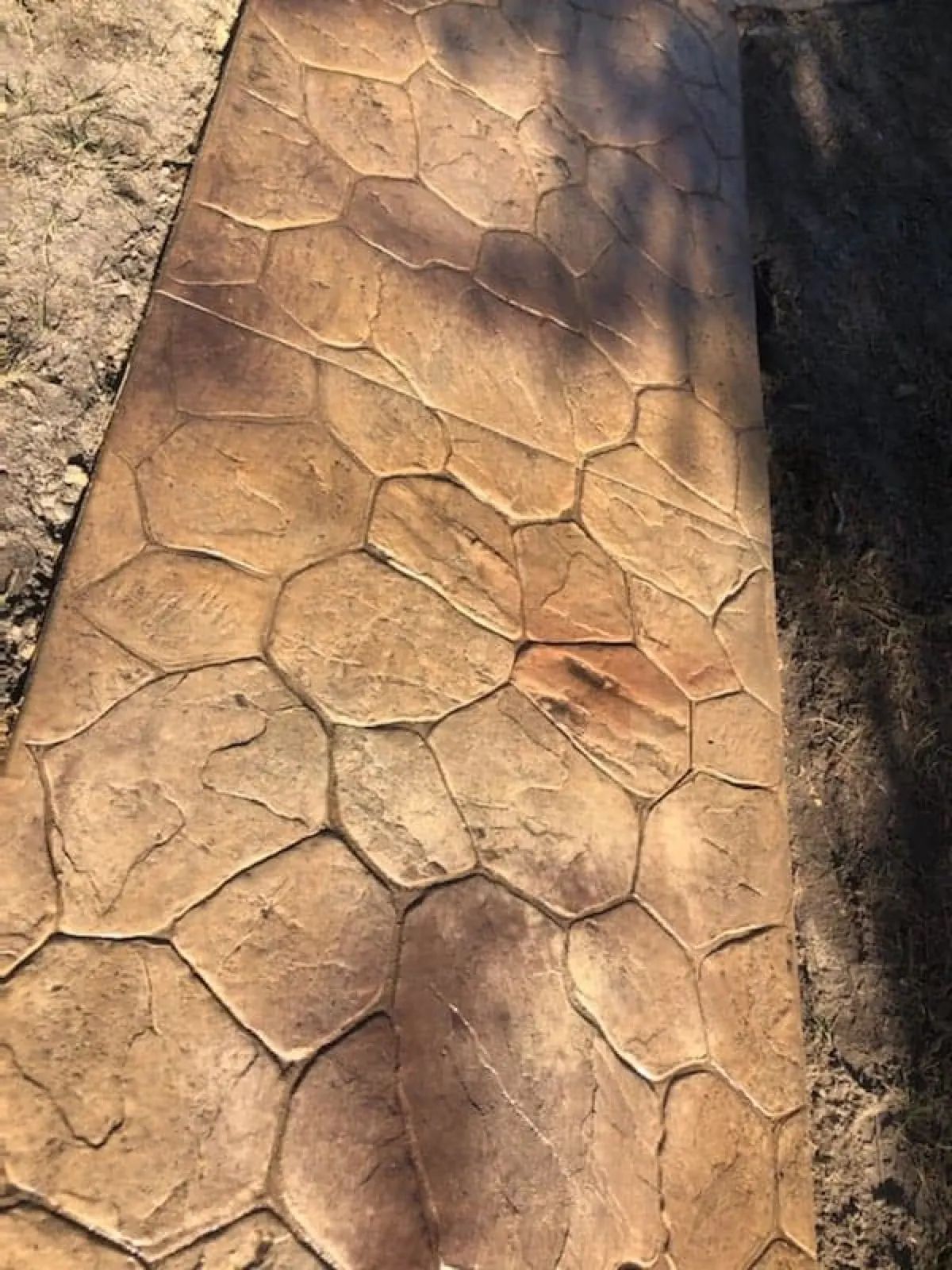
We build paver, concrete and stamped concrete walkways across Brevard County, from front entry walks to side paths, steps and stoops.
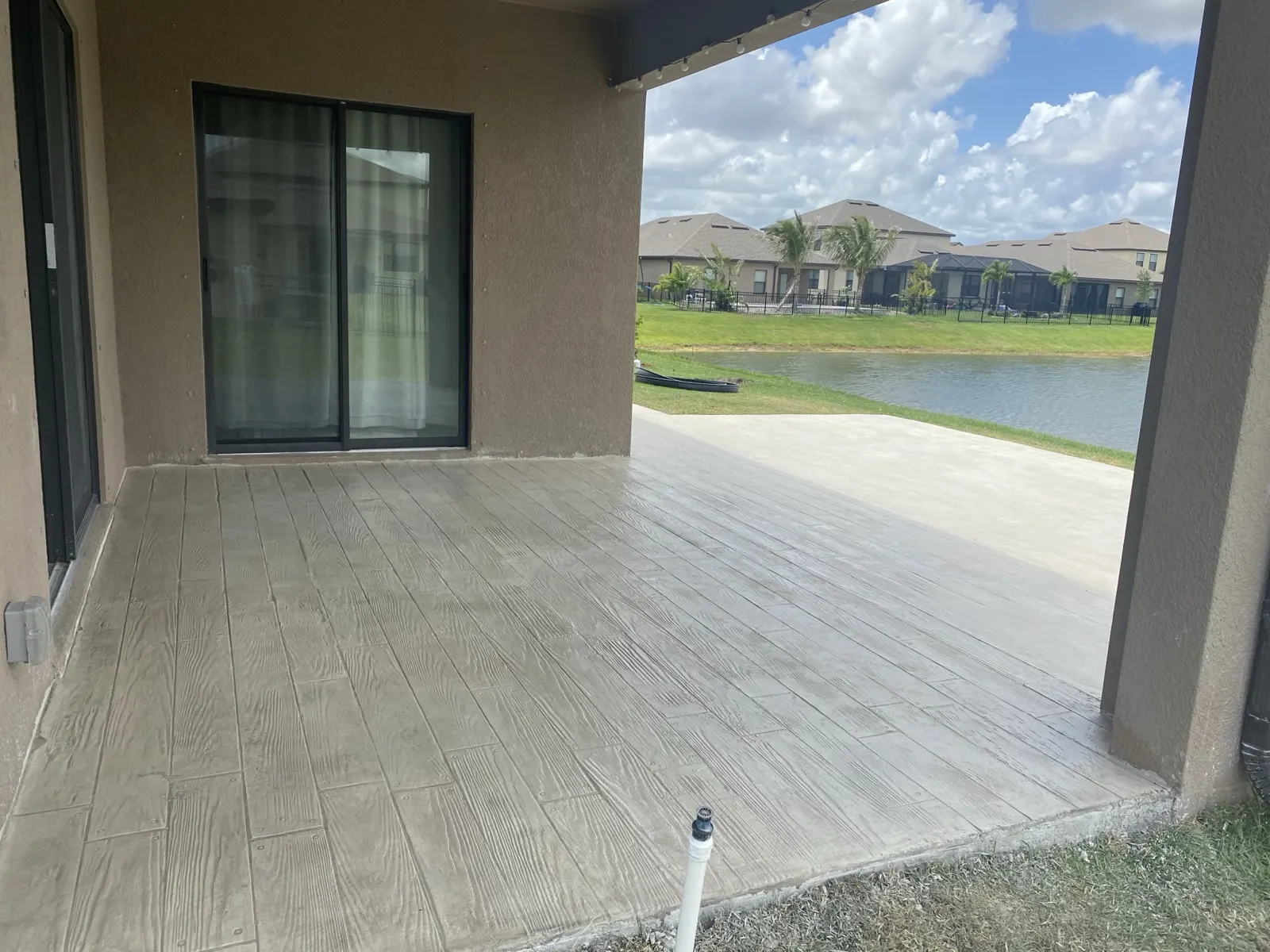
Concrete resurfacing puts a stamped concrete overlay over a slab that is still sound. Wood plank, flagstone, slate, and brick patterns for patios, walkways, and driveways across Brevard County.
Most outfits lay pavers or pour concrete. We do both, so you see each option priced on your actual project and pick what fits the house and the budget.
Stamped concrete is the specialty. Stone, wood and brick patterns, colors matched to your home, borders and hand-carved details you will not get from a builder-grade slab.
Every estimate comes from a site visit. We measure the real surface, show you patterns and pavers on the spot, and price the job you actually have.
Based in Palm Bay, working the whole county. Florida sun, salt air and summer rain shape how every surface here gets built, and we build for it.
A driveway that needs replacing, a patio you want stamped, a pool deck past its best? Call or send the form. We come out, look at the job with you, and quote it free.
Tell us about your project. We get back to you fast.